
Generic Turbine Models
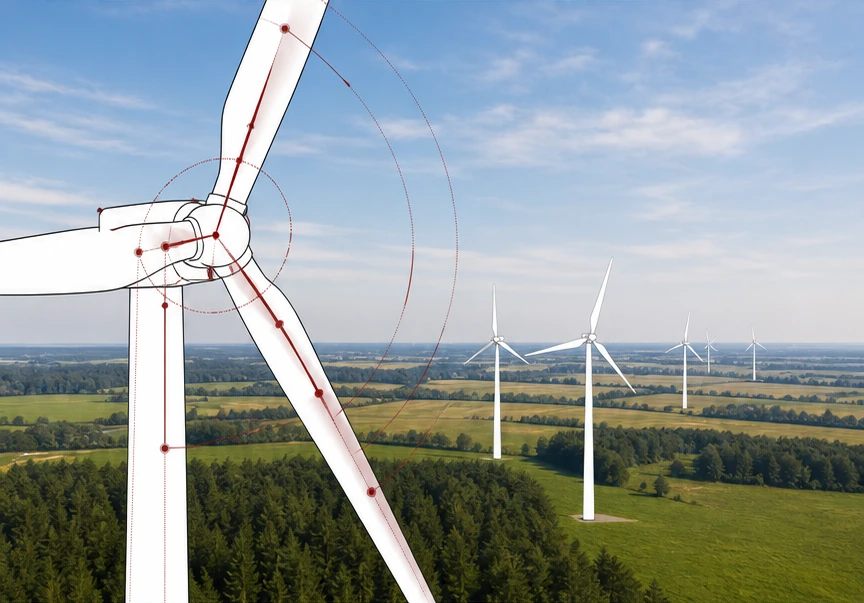
Parametric servo-aeroelastic models couple aerodynamics, structural behaviour and control.
Identify reserves. Support decisions.
Using generic servo-aeroelastic models, reconstructed design loads and site-specific simulations, we provide a robust assessment of the actual loads acting on a wind turbine.
The objective
Load calculations link aerodynamics, structures and control. Comparing the original design with the actual site reveals available reserves, limiting components and measures that support safe and economical operation.
Scope of services
We combine the modules to suit the project phase, from a focused individual assessment to an integrated analysis.
Parametric servo-aeroelastic models couple aerodynamics, structural behaviour and control.
Reconstruction of the original load assumptions and design limits as a reliable reference.
Calculation of actual loads under the project's wind, turbulence, wake and operating conditions.
Component-specific analysis of rotor blades, hub, tower and other relevant structures.
Identification of load reserves and limiting components as the analytical part of a continued-operation assessment.
Assessment of operating modes and shutdown strategies with a view to reducing loads while maintaining availability and yield.
Project process
Turbine geometry, structural parameters and controller behaviour are transferred into a robust calculation model.
We reconstruct the design conditions and establish a consistent reference for the load comparison.
Relevant load cases are calculated using project-specific wind and operating conditions.
Design and site loads are compared component by component, documented and technically evaluated.
What you receive
Missing data is not an obstacle. We identify gaps early and agree appropriate substitute assumptions or additions with you.
Frequently asked questions
Two identical turbines can experience very different loads due to site conditions, turbulence, wake effects and operation. The individual load history is decisive.
Ideally before the end of the twentieth year of operation. This leaves time to supplement data, carry out repairs, coordinate partner inspections and plan the commercial case.
IDASWIND works with independent accredited or certified partners. The analytical work and practical inspection are combined to form a consistent overall assessment.
Next step